
The dream
A king who could not sleep
“And in the second year of the reign of Nebuchadnezzar Nebuchadnezzar dreamed dreams, wherewith his spirit was troubled, and his sleep brake from him.”Daniel 2:1
The most powerful man in the world could not sleep. Something had come to him in the night and left him shaking, and by morning the dream itself was gone. He knew only that it had been terrible, and that it mattered. So he called in the men he paid to explain such things, the astrologers and the magicians and the wise men of Babylon, the whole learned class of his kingdom, and he gave them an order no one could obey. He would not tell them the dream and ask what it meant. They were to tell him the dream first, the thing he could no longer remember, and then explain it. If they failed, they would be killed and their houses pulled down. They told him plainly that no king had ever asked such a thing, and that no man on earth could do it. He ordered all of them put to death.
The Case for Christian Prophecy, Chapter 12, The Statue and the Stone
More from the book
That moment matters more than the famous part it leads to. God did not send this message to His own people, gathered and faithful. He sent it into the bedroom of a pagan tyrant, a man who would soon build a golden statue and throw three of these same exiles into a furnace for refusing to bow to it. God reached into the fears of the king who had burned His city and handed him the future of the world, in detail, centuries of it. That is not a distant God settling a score. That is mercy, aimed at the man least likely to listen. Every empire named below is cold arithmetic without it. And the mercy was not wasted.
The Case for Christian Prophecy, Chapter 12, The Statue and the Stone
A God in heaven who reveals secrets
“Daniel answered in the presence of the king, and said, The secret which the king hath demanded cannot the wise men, the astrologers, the magicians, the soothsayers, shew unto the king; But there is a God in heaven that revealeth secrets, and maketh known to the king Nebuchadnezzar what shall be in the latter days. Thy dream, and the visions of thy head upon thy bed, are these;”Daniel 2:27-28
Into that execution order, already given, walked a young man. He had been carried off from a conquered country as a teenager, one of the deported, a nobody from a beaten people. He asked for time, and that night the secret was shown to him. The next morning he stood in front of the man who had ordered his death and said that there is a God in heaven who reveals secrets, and that this God had shown the king what was going to happen. Then he told the king his own dream back to him, and explained it.
The Case for Christian Prophecy, Chapter 12, The Statue and the Stone
Ellen White
Behold the Jewish captive, calm and self-possessed, in the presence of the monarch of the world’s most powerful empire. In his first words he disclaimed honor for himself and exalted God as the source of all wisdom.
Ellen G. White, Prophets and Kings, PK 494.3
The statue
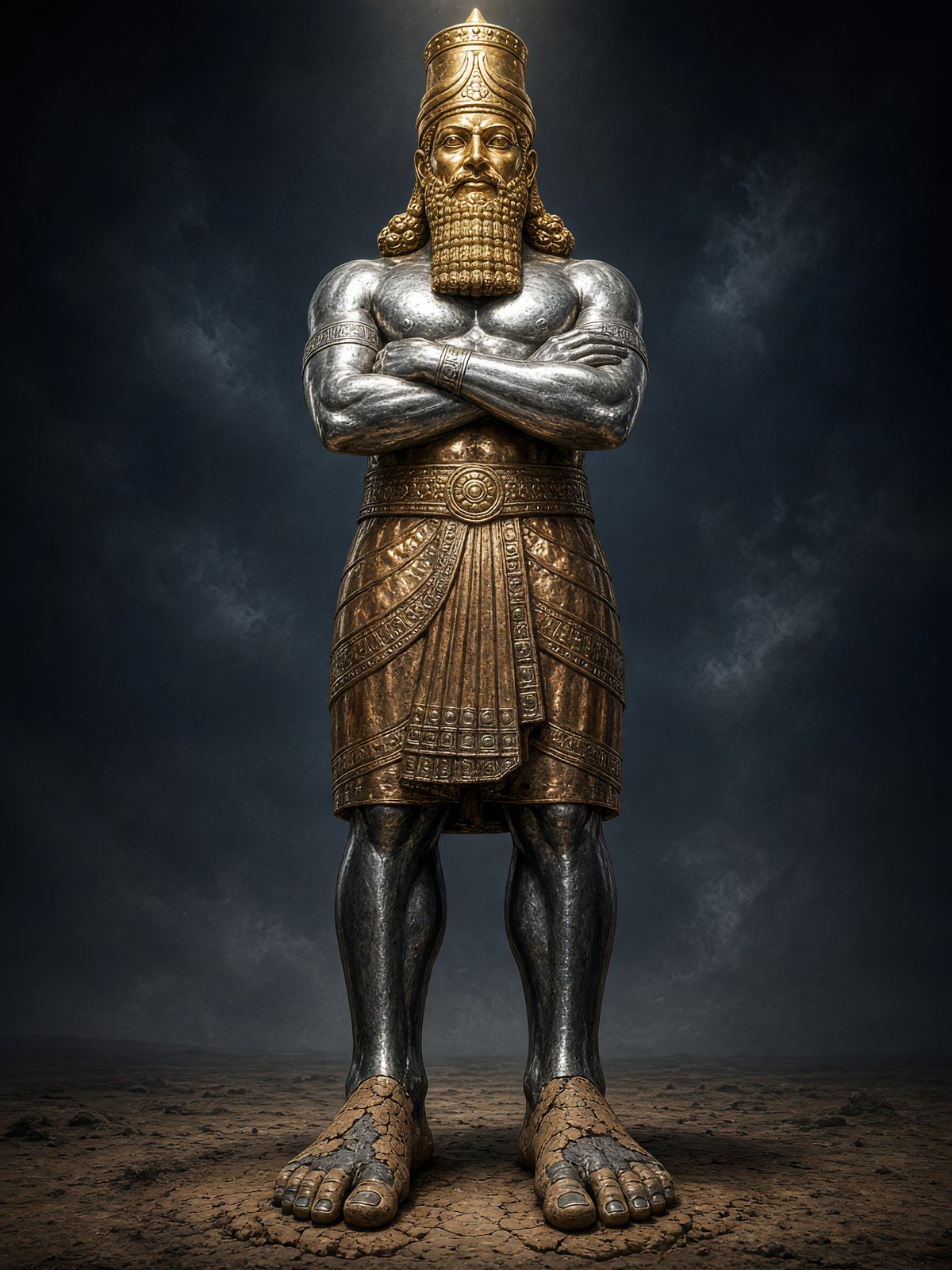
“Thou, O king, sawest, and behold a great image. This great image, whose brightness was excellent, stood before thee; and the form thereof was terrible. This image's head was of fine gold, his breast and his arms of silver, his belly and his thighs of brass, His legs of iron, his feet part of iron and part of clay.”Daniel 2:31-33
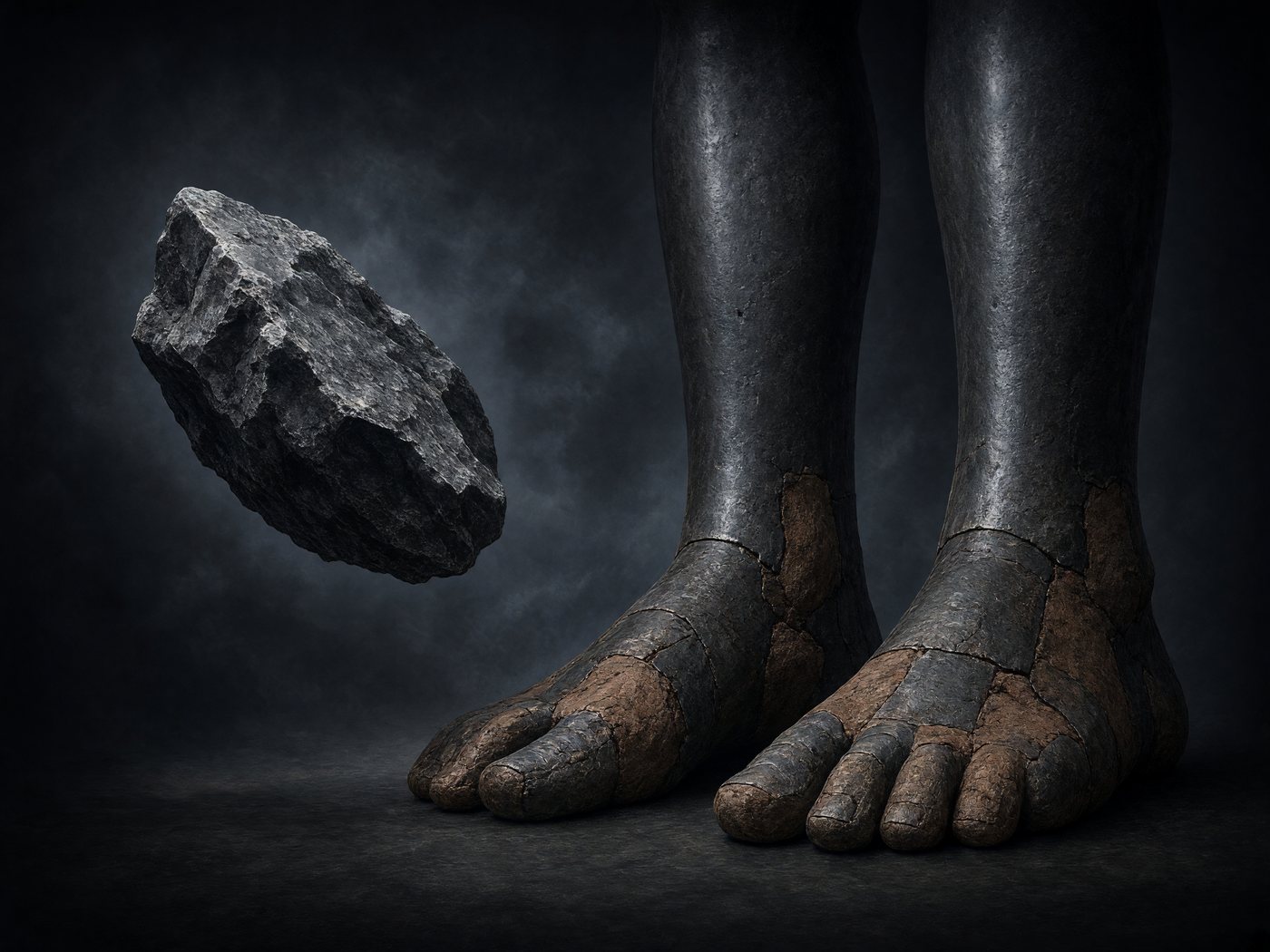
The dream was a statue of a man, made of four metals stacked from head to foot. The young man, whose name was Daniel, described it to the king: "This image's head was of fine gold, his breast and his arms of silver, his belly and his thighs of brass, his legs of iron, his feet part of iron and part of clay" (Daniel 2:32-33). Then he gave the meaning, metal by metal. Each metal was a kingdom. They would rule one after another, in that order, from the gold head down to the feet.
The Case for Christian Prophecy, Chapter 12, The Statue and the Stone
More from the book
The metals also fall in value as they go. The second kingdom is called "inferior" to the first (Daniel 2:39), and the materials drop in worth the rest of the way down. That does not mean each empire was smaller or weaker than the last, because several were in fact larger than Babylon. It means the metals get less precious and less able to hold together as the statue goes down. Gold, then silver, then bronze, then iron, then iron crumbling into clay. It is a picture of decline, not a claim about the size of armies.
The Case for Christian Prophecy, Chapter 12, The Statue and the Stone
Daniel did not receive this outline a single time. The same line of kingdoms came to him three times, in three separate visions, and each one filled in more detail. The first was this statue. It came early in his life, when he was a young captive in Nebuchadnezzar's court, around 603 years before Christ. Decades later, as an old man, he saw it again, this time as four wild animals coming up out of a stormy sea (Daniel 7). A few years after that, he saw it a third time, now as a ram and a goat (Daniel 8).
The Case for Christian Prophecy, Chapter 12, The Statue and the Stone
Ellen White
The King of kings was about to communicate great truth to the Babylonian monarch. God would reveal that He has power over the kingdoms of the world, power to enthrone and to dethrone kings. Nebuchadnezzar’s mind was to be awakened, if possible, to a sense of his responsibility to Heaven. The events of the future, reaching down to the end of time, were to be opened before him.
Ellen G. White, Prophets and Kings, PK 497.4
Kingdom by kingdom
The head of gold
“Thou, O king, art a king of kings: for the God of heaven hath given thee a kingdom, power, and strength, and glory. And wheresoever the children of men dwell, the beasts of the field and the fowls of the heaven hath he given into thine hand, and hath made thee ruler over them all. Thou art this head of gold.”Daniel 2:37-38
He did not make the king guess the first one. He pointed straight at him: "Thou art this head of gold" (Daniel 2:38). That one sentence ties the whole prophecy to a fixed point. This is not a floating riddle waiting for some future age to claim it. It is pinned to a named man on a known throne in the sixth century before Christ, and from him it runs forward: "after thee shall arise another kingdom… and another third kingdom… and the fourth kingdom shall be strong as iron" (Daniel 2:39-40). A reader is not free to take this as a picture of things still in our future. The dream itself tells him to begin at Babylon and count down from there.
The Case for Christian Prophecy, Chapter 12, The Statue and the Stone
The lion with eagle’s wings
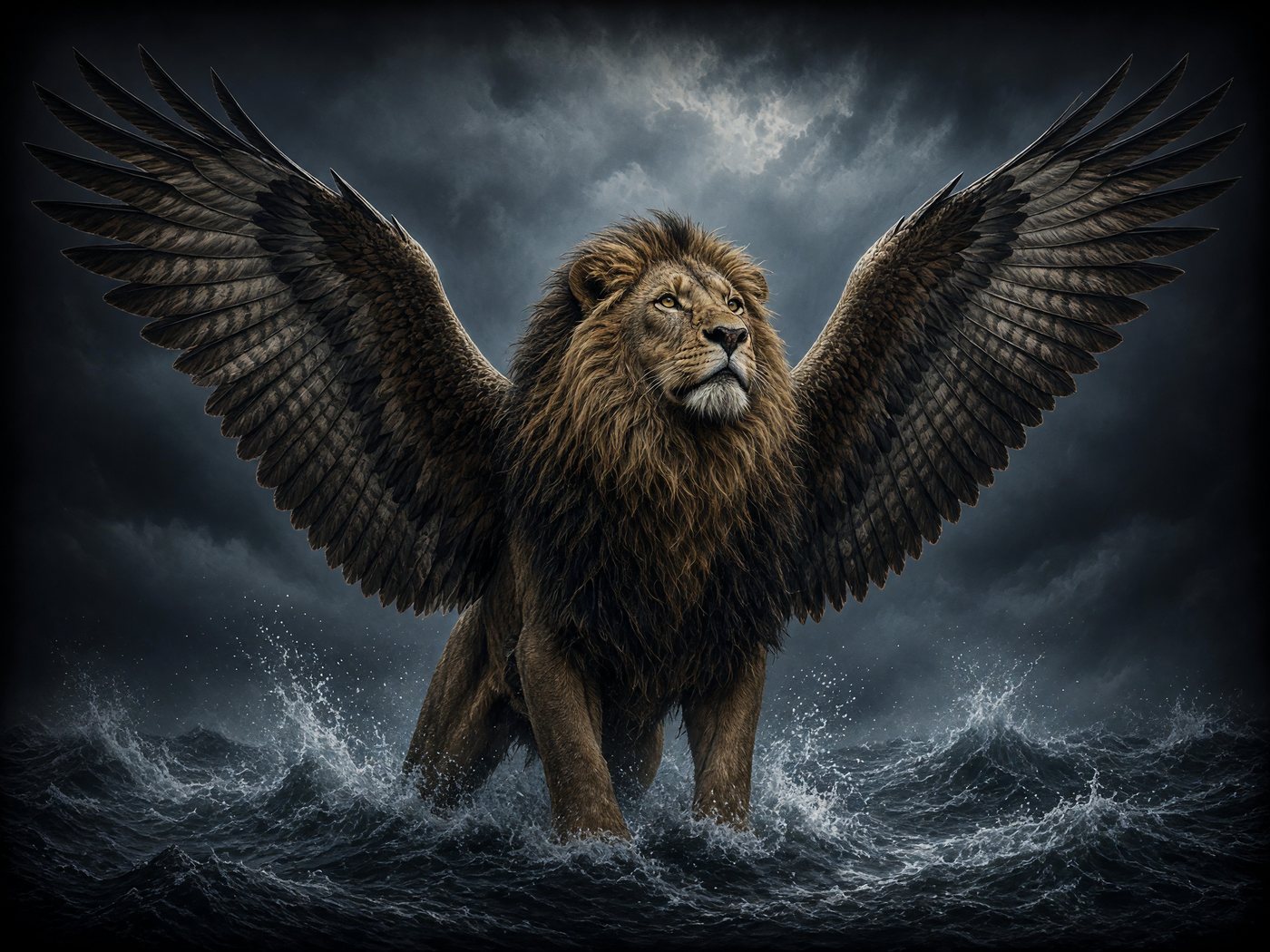
“Daniel spake and said, I saw in my vision by night, and, behold, the four winds of the heaven strove upon the great sea. And four great beasts came up from the sea, diverse one from another. The first was like a lion, and had eagle's wings: I beheld till the wings thereof were plucked, and it was lifted up from the earth, and made stand upon the feet as a man, and a man's heart was given to it.”Daniel 7:2-4
Babylon — the gold. Daniel handed this one to the king's face: "Thou art this head of gold." In the second vision it is a lion with eagle's wings (Daniel 7:4), the most regal of beasts, which is how Babylon saw itself. The lion was its royal emblem, striding in glazed brick along the great processional way into the city. The empire of the man in the bed.
The Case for Christian Prophecy, Chapter 12, The Statue and the Stone
More from the book
“These great beasts, which are four, are four kings, which shall arise out of the earth.”Daniel 7:17
The breast and arms of silver
“And after thee shall arise another kingdom inferior to thee, and another third kingdom of brass, which shall bear rule over all the earth.”Daniel 2:39
Medo-Persia — the silver. The chest and two arms of silver, then the bear, lopsided, "raised up itself on one side" (Daniel 7:5), then the ram with the two uneven horns. This is the empire that took Babylon in a single night, in 539 before Christ, the two-part kingdom drawn from Daniel's own labels. The statue drew it before there was any such kingdom to draw. The bear and the ram came later, in Babylon's last years, and they drew it before it came for Babylon. The bear in that vision also has "three ribs in the mouth of it" (Daniel 7:5), a beast caught in the middle of feeding. The dream never says what the three ribs were, and the picture is doing its work without them: this is an animal with an appetite.
The Case for Christian Prophecy, Chapter 12, The Statue and the Stone
Ellen White
Hundreds of years before certain nations came upon the stage of action, the Omniscient One looked down the ages and predicted the rise and fall of the universal kingdoms. God declared to Nebuchadnezzar that the kingdom of Babylon should fall, and a second kingdom would arise, which also would have its period of trial. Failing to exalt the true God, its glory would fade, and a third kingdom would occupy its place. This also would pass away; and a fourth, strong as iron, would subdue the nations of the world.
Ellen G. White, Prophets and Kings, PK 501.1
The bear, raised up on one side
“And behold another beast, a second, like to a bear, and it raised up itself on one side, and it had three ribs in the mouth of it between the teeth of it: and they said thus unto it, Arise, devour much flesh.”Daniel 7:5
And that is the picture Daniel drew, twice. The second beast, the bear, "raised up itself on one side" (Daniel 7:5), lopsided, one shoulder higher than the other.
The Case for Christian Prophecy, Chapter 12, The Statue and the Stone
The ram with two horns
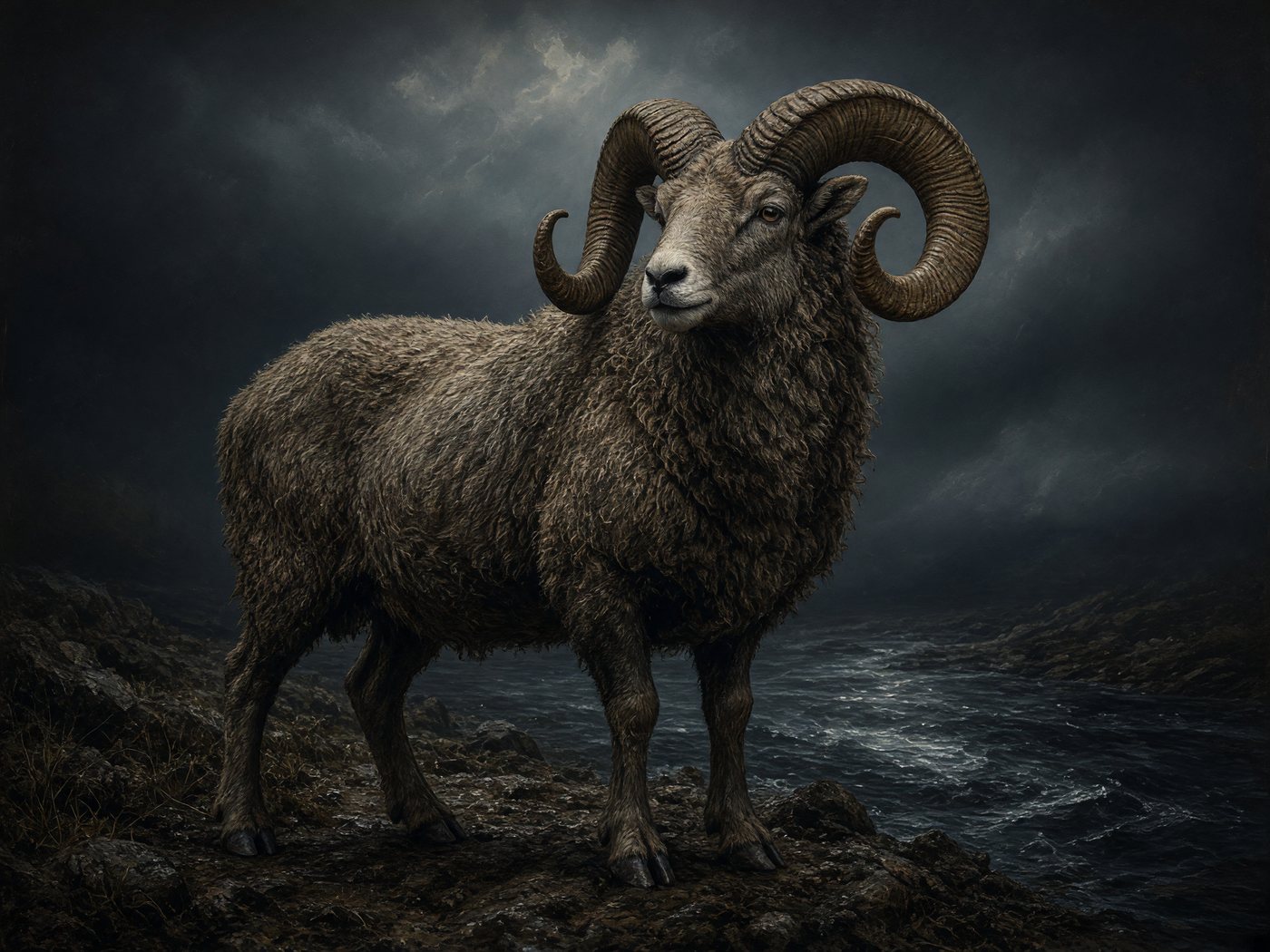
“Then I lifted up mine eyes, and saw, and, behold, there stood before the river a ram which had two horns: and the two horns were high; but one was higher than the other, and the higher came up last. I saw the ram pushing westward, and northward, and southward; so that no beasts might stand before him, neither was there any that could deliver out of his hand; but he did according to his will, and became great.”Daniel 8:3-4
“The ram which thou sawest having two horns are the kings of Media and Persia.”Daniel 8:20
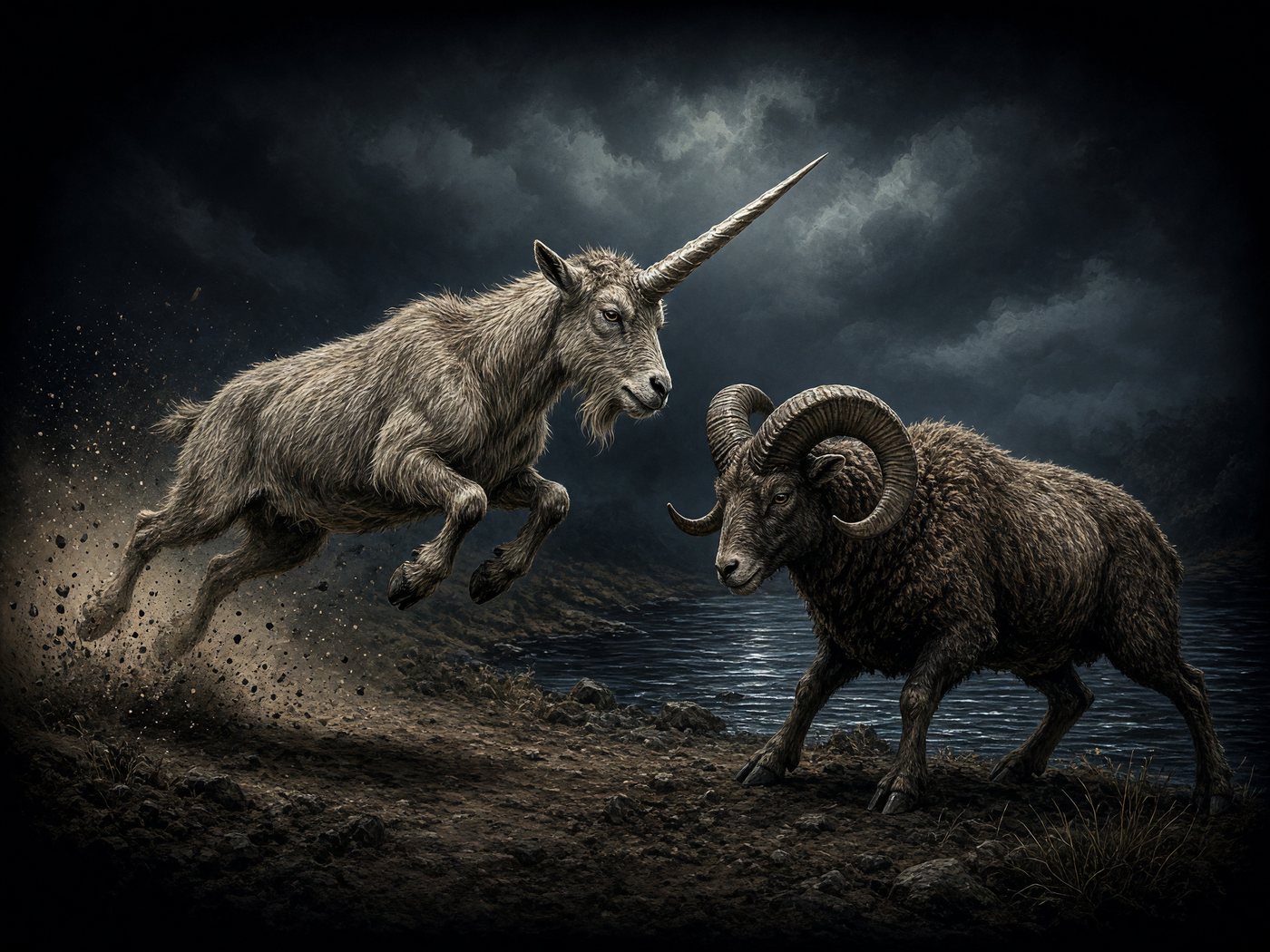
The ram's two horns were uneven: "one was higher than the other, and the higher came up last" (Daniel 8:3). One kingdom, two unequal parts, the greater part rising later. That is Medo-Persia exactly, Media first and smaller, Persia rising last and larger, drawn before it happened.
The Case for Christian Prophecy, Chapter 12, The Statue and the Stone
More from the book
In the third vision the angel stops and names the figures. The two-horned ram, he says, "are the kings of Media and Persia" (Daniel 8:20). One animal, two horns, a single kingdom made of two parts.
The Case for Christian Prophecy, Chapter 12, The Statue and the Stone
The belly and thighs of brass
“And after thee shall arise another kingdom inferior to thee, and another third kingdom of brass, which shall bear rule over all the earth.”Daniel 2:39
The belly and thighs of bronze, then the leopard "which had upon the back of it four wings of a fowl" and "four heads" (Daniel 7:6), then the goat that came "from the west on the face of the whole earth, and touched not the ground" (Daniel 8:5), a beast moving so fast its feet do not seem to land.
The Case for Christian Prophecy, Chapter 12, The Statue and the Stone
The leopard with four wings and four heads
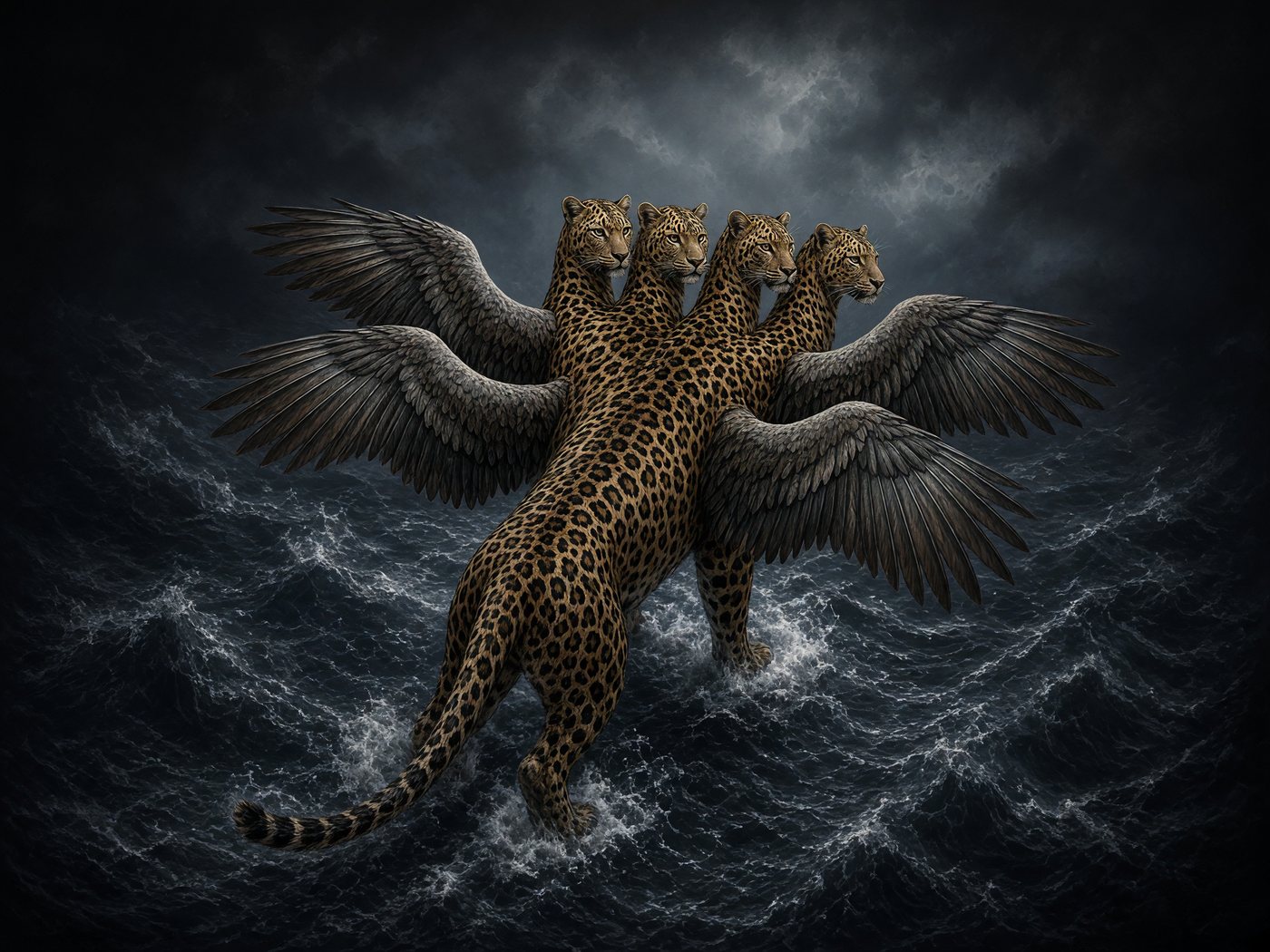
“After this I beheld, and lo another, like a leopard, which had upon the back of it four wings of a fowl; the beast had also four heads; and dominion was given to it.”Daniel 7:6
Four heads, four horns, four wings, and the splitting was drawn into the picture before the man was even born.
The Case for Christian Prophecy, Chapter 12, The Statue and the Stone
The goat from the west
“And as I was considering, behold, an he goat came from the west on the face of the whole earth, and touched not the ground: and the goat had a notable horn between his eyes. And he came to the ram that had two horns, which I had seen standing before the river, and ran unto him in the fury of his power. And I saw him come close unto the ram, and he was moved with choler against him, and smote the ram, and brake his two horns: and there was no power in the ram to stand before him, but he cast him down to the ground, and stamped upon him: and there was none that could deliver the ram out of his hand.”Daniel 8:5-7
“And the rough goat is the king of Grecia: and the great horn that is between his eyes is the first king.”Daniel 8:21
That is Alexander, who conquered the known world before he was thirty-three and then died young.
The Case for Christian Prophecy, Chapter 12, The Statue and the Stone
The goat that overruns it is "the king of Grecia" (Daniel 8:21).
The Case for Christian Prophecy, Chapter 12, The Statue and the Stone
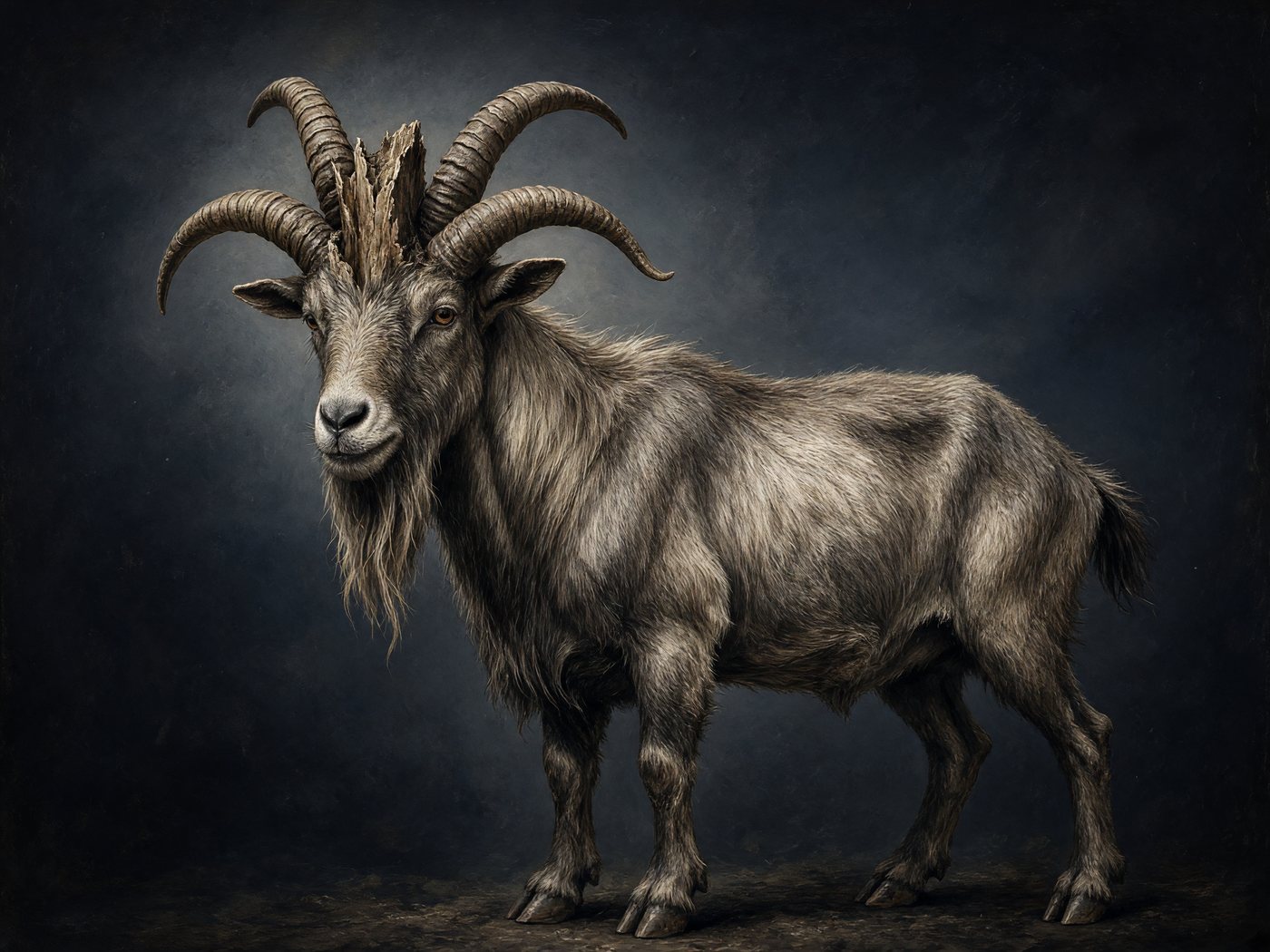
The great horn broken, and four in its place
“Therefore the he goat waxed very great: and when he was strong, the great horn was broken; and for it came up four notable ones toward the four winds of heaven.”Daniel 8:8
“Now that being broken, whereas four stood up for it, four kingdoms shall stand up out of the nation, but not in his power.”Daniel 8:22
The dream also said what would happen to his empire next. The goat's one great horn "was broken; and for it came up four" (Daniel 8:8). Alexander's empire did not pass to a son. It split four ways among his generals, into Macedonia, Thrace and Asia Minor, Egypt, and the long eastern stretch from Syria to Babylon.
The Case for Christian Prophecy, Chapter 12, The Statue and the Stone
Was the last kingdom Greece?
Many careful scholars end the line with a Greek king, Antiochus. The book states their case first, then answers it.
Many careful scholars do not read the four kingdoms this way. They count them differently, as Babylon, then Media, then Persia, then Greece, which makes the fourth kingdom not Rome but Greece, ending with a Greek tyrant named Antiochus in the second century before Christ. They also argue that the book of Daniel was not written in the sixth century at all, but around 165 years before Christ, after most of these events had already happened. On that reading there is no miracle here. It is history written down by someone who already knew the outcome and then dressed it up as a prediction. This objection is old and it is not lazy. It goes back at least to Porphyry, a sharp pagan philosopher who argued in the third century after Christ that Daniel was written in the age of the Greek tyrant it describes so exactly. The modern form of it rests on real evidence. There is the language the book is written in, part Hebrew and part Aramaic, and to many scholars the kind of each that Daniel uses, along with a few words borrowed from Greek, reads as later than the sixth century. There is where it sits in the Jewish Bible, which sorts its books into groups, and Daniel sits with the later group of Writings rather than among the Prophets. And there is the way its detail grows sharpest exactly through the reign of Antiochus and then goes vague right after he dies.
The Case for Christian Prophecy, Chapter 12, The Statue and the Stone
The book’s answer
Two different questions are tangled together there. Which kingdom is the fourth, and when the book was written. They come apart cleanly, and they have separate answers.
The Case for Christian Prophecy, Chapter 12, The Statue and the Stone
First question: which kingdom is the fourth? The answer turns on a simple rule. I do not get to decide what the symbols mean, because the book of Daniel defines them itself. On the exact point in dispute, whether Media and Persia are one kingdom or two, Daniel answers out loud. In the third vision the angel stops and names the figures. The two-horned ram, he says, "are the kings of Media and Persia" (Daniel 8:20). One animal, two horns, a single kingdom made of two parts. The goat that overruns it is "the king of Grecia" (Daniel 8:21). So by Daniel's own labels, Media and Persia are one kingdom, which makes the four Babylon, Medo-Persia, Greece, and a fourth that is none of these.
The Case for Christian Prophecy, Chapter 12, The Statue and the Stone
That does not settle it by itself, because the book also gives the other side a foothold. Daniel's own story has a ruler it calls "Darius the Mede" taking the kingdom after Babylon falls, before Cyrus the Persian. That is exactly why serious scholars feel entitled to split Media off from Persia and count them as two. That detail is there, and it is the objection's one solid piece of ground. Set against the rest of the evidence, though, the weight falls one way.
The Case for Christian Prophecy, Chapter 12, The Statue and the Stone
The history comes first. There was a Median kingdom before Persia rose. But Cyrus the Persian conquered Media around 550 years before Christ, eleven years before Babylon fell. From that point on it was one empire, Medo-Persian, with Persia the dominant partner. The kingdom that took Babylon in 539 BC, the kingdom that follows the gold in the dream, was not "the Medes" and then later "the Persians" as two separate world-powers in turn. It was the single combined empire, Persia the greater part of it. And that is the picture Daniel drew, twice. The second beast, the bear, "raised up itself on one side" (Daniel 7:5), lopsided, one shoulder higher than the other. The ram's two horns were uneven: "one was higher than the other, and the higher came up last" (Daniel 8:3). One kingdom, two unequal parts, the greater part rising later. That is Medo-Persia exactly, Media first and smaller, Persia rising last and larger, drawn before it happened. The other reading has to cut that one animal in half and call each half a kingdom. But Daniel calls the ram one beast, and history made them one empire under Cyrus. Splitting them means going against both the text and the record. Keeping them together means going against neither.
The Case for Christian Prophecy, Chapter 12, The Statue and the Stone
Then there is the matter of where the stone falls. At the end of the dream a stone strikes the statue "upon his feet" (Daniel 2:34), the very bottom, the iron and clay, the last kingdom. Greece is the bronze belly and thighs, higher up the body. If Greece were the last kingdom, the stone should strike the bronze. It does not. It strikes lower, at a kingdom that comes after Greece. The stone falls on whichever kingdom is last, and on this reading Greece is not last.
The Case for Christian Prophecy, Chapter 12, The Statue and the Stone
So where does it leave us? The other reading is held by serious people, and it has its one real foothold in "Darius the Mede." But no single thread here was ever meant to carry the load alone. Daniel's own labels fuse Media and Persia into one kingdom. The lopsided bear and the uneven ram draw that one kingdom, twice, before it came. History confirms it, because the empire that took Babylon was already the combined Medo-Persian power, Persia the greater. The stone strikes the feet, the last kingdom, below Greece. The book seals its meaning for "the time of the end," not for its writer's own day. And the one feature the whole reading rests its weight on, a final kingdom that breaks and never re-forms, landed six centuries after the latest possible ink and has held for fifteen hundred years since. It weighs, hard, toward Rome. The other reading can still be held, but it now carries the harder case.
The Case for Christian Prophecy, Chapter 12, The Statue and the Stone
The legs of iron
“And the fourth kingdom shall be strong as iron: forasmuch as iron breaketh in pieces and subdueth all things: and as iron that breaketh all these, shall it break in pieces and bruise.”Daniel 2:40
The dream said this kingdom would be "strong as iron," iron that "breaketh in pieces and subdueth all things" (Daniel 2:40). Rome is the fourth empire in the historical order, and that much is not in dispute. The only way to escape Rome is to move the fourth kingdom back to Greece, and the text has to be bent hard to do that. Rome is the iron, the one whose broken pieces are still lying on the ground today.
The Case for Christian Prophecy, Chapter 12, The Statue and the Stone
A beast unlike any other, with ten horns
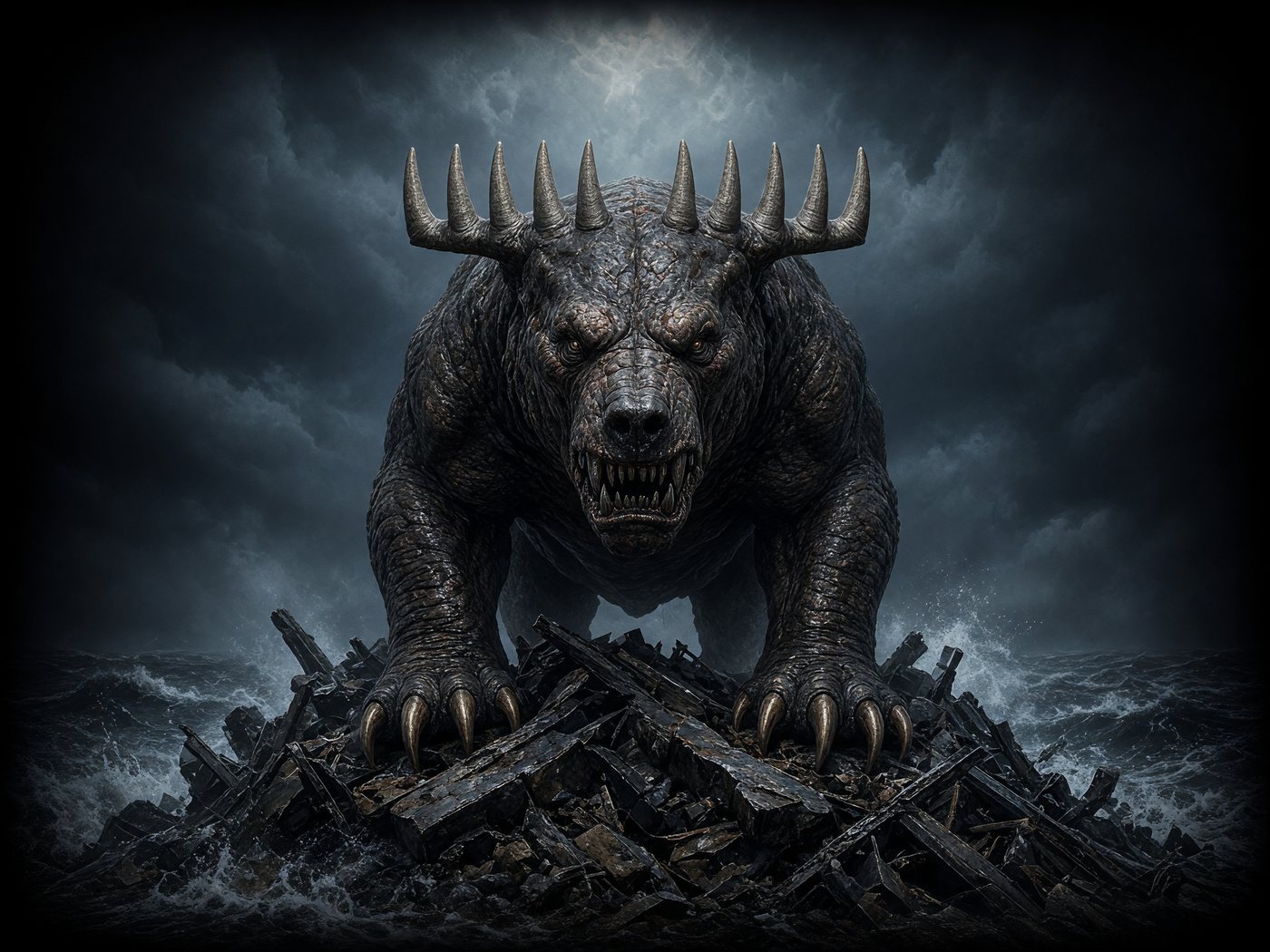
“After this I saw in the night visions, and behold a fourth beast, dreadful and terrible, and strong exceedingly; and it had great iron teeth: it devoured and brake in pieces, and stamped the residue with the feet of it: and it was diverse from all the beasts that were before it; and it had ten horns.”Daniel 7:7
“Thus he said, The fourth beast shall be the fourth kingdom upon earth, which shall be diverse from all kingdoms, and shall devour the whole earth, and shall tread it down, and break it in pieces.”Daniel 7:23
The legs of iron, then a fourth beast so terrible the prophet had no animal to compare it to: "dreadful and terrible, and strong exceedingly… great iron teeth: it devoured and brake in pieces" (Daniel 7:7).
The Case for Christian Prophecy, Chapter 12, The Statue and the Stone
The feet of iron and clay
“And whereas thou sawest the feet and toes, part of potters' clay, and part of iron, the kingdom shall be divided; but there shall be in it of the strength of the iron, forasmuch as thou sawest the iron mixed with miry clay. And as the toes of the feet were part of iron, and part of clay, so the kingdom shall be partly strong, and partly broken. And whereas thou sawest iron mixed with miry clay, they shall mingle themselves with the seed of men: but they shall not cleave one to another, even as iron is not mixed with clay.”Daniel 2:41-43
One detail at the bottom of the statue carries more weight than the rest of the dream put together. The two feet are iron mixed with clay, a kingdom "partly strong, and partly broken" (Daniel 2:42), and of it the dream says one flat thing: "they shall not cleave one to another, even as iron is not mixed with clay" (Daniel 2:43). The last kingdom would break into pieces, and the pieces would never join back together.
The Case for Christian Prophecy, Chapter 12, The Statue and the Stone
More from the book
Five world-empires, set down in their right order by a captive who lived under the first one, and the first of them named to the king's face. The statue has five pieces, not four. The feet are a stage of their own. The metal in them is still iron, the fourth kingdom's metal, so the feet are not some new kingdom arriving from somewhere else. They are what the fourth kingdom turns into at the end. The dream gives that a piece of the statue to itself, and so it counts as a stage. Four of those five pieces are behind us now, finished and in the record. Babylon, Medo-Persia, Greece and Rome have all risen and fallen exactly as the order required. The fifth piece, the broken feet, divided and unable to re-join, is the world we are still living in. That is the part a man cannot check in a history book, because it is not over. He checks it by looking out the window.
The Case for Christian Prophecy, Chapter 12, The Statue and the Stone
The dream's strangest claim is also the easiest one to test, because it is not about the past at all. The iron does not give way to a fresh metal the way gold gave way to silver. It breaks. The feet are iron mixed with clay, and the dream says of the broken pieces: "they shall not cleave one to another, even as iron is not mixed with clay" (Daniel 2:43). The last kingdom would shatter, and the pieces would never fuse back into one. Not that it would fall, because every empire falls. That this one, once broken, would stay broken.
The Case for Christian Prophecy, Chapter 12, The Statue and the Stone
Another little horn
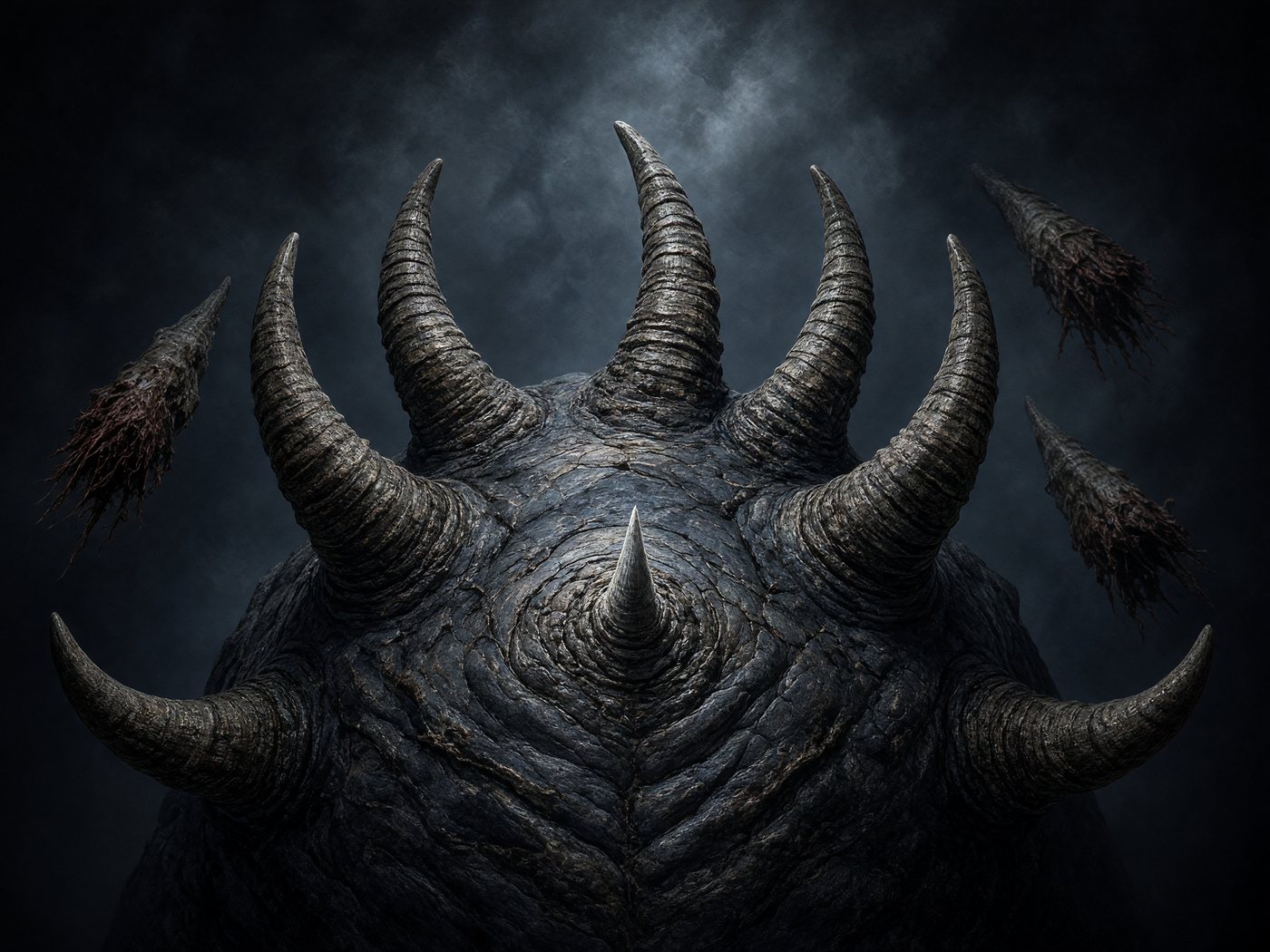
“And the ten horns out of this kingdom are ten kings that shall arise: and another shall rise after them; and he shall be diverse from the first, and he shall subdue three kings. And he shall speak great words against the most High, and shall wear out the saints of the most High, and think to change times and laws: and they shall be given into his hand until a time and times and the dividing of time.”Daniel 7:24-25
Among the broken pieces of that fourth kingdom, the visions describe another power that rises up, not a fifth empire, but something that grows among the fragments and outlasts them. This same line of kingdoms does not stop with Daniel. A later book of the Bible, Revelation, picks it up and carries it forward. Naming that power is the single most important turn in this whole account, and it waits until the case for it has been built. For now it is enough that the dream did not stop at the broken feet. Something rises out of them.
The Case for Christian Prophecy, Chapter 12, The Statue and the Stone
Who this power is, the book takes up in Chapter 17, The Beast, Named, once the case for it has been built.
More verses
“I considered the horns, and, behold, there came up among them another little horn, before whom there were three of the first horns plucked up by the roots: and, behold, in this horn were eyes like the eyes of man, and a mouth speaking great things.”Daniel 7:8
“I beheld, and the same horn made war with the saints, and prevailed against them;”Daniel 7:21
The court sits, and the saints receive the kingdom
“I beheld till the thrones were cast down, and the Ancient of days did sit, whose garment was white as snow, and the hair of his head like the pure wool: his throne was like the fiery flame, and his wheels as burning fire. A fiery stream issued and came forth from before him: thousand thousands ministered unto him, and ten thousand times ten thousand stood before him: the judgment was set, and the books were opened.”Daniel 7:9-10
“But the judgment shall sit, and they shall take away his dominion, to consume and to destroy it unto the end. And the kingdom and dominion, and the greatness of the kingdom under the whole heaven, shall be given to the people of the saints of the most High, whose kingdom is an everlasting kingdom, and all dominions shall serve and obey him.”Daniel 7:26-27
The vision also shows who is on trial. The power in the dock is a "little horn", a power that "made war with the saints." The court strips away its rule: "But the judgment shall sit, and they shall take away his dominion, to consume and to destroy it unto the end" (Daniel 7:26). When the verdict comes, it falls in favour of God's people, and it does more than clear them. "Until the Ancient of days came, and judgment was given to the saints of the most High; and the time came that the saints possessed the kingdom" (Daniel 7:22). Those middle words have been read two ways for centuries. Some read "judgment was given to the saints" as judgment given in their favour, and some read it as judgment put into their hands, so that they are the ones given the right to judge. The saints finish in the same place either way, because the next verses hand them the kingdom outright. The kingdom itself changes hands: "And the kingdom and dominion, and the greatness of the kingdom under the whole heaven, shall be given to the people of the saints of the most High" (Daniel 7:27). Those lines are the comfort of this whole chapter. When this court finishes, it comes down on the side of the saints, and they are handed the kingdom the horn had been holding.
The Case for Christian Prophecy, Chapter 15, The Judgment
More verses, and the book
“I saw in the night visions, and, behold, one like the Son of man came with the clouds of heaven, and came to the Ancient of days, and they brought him near before him. And there was given him dominion, and glory, and a kingdom, that all people, nations, and languages, should serve him: his dominion is an everlasting dominion, which shall not pass away, and his kingdom that which shall not be destroyed.”Daniel 7:13-14
“Until the Ancient of days came, and judgment was given to the saints of the most High; and the time came that the saints possessed the kingdom.”Daniel 7:22
It is all there. Thrones are set in place. The old English "cast down" means set down, put in position, and that is how the modern versions render it, so nobody should picture thrones being toppled. The Ancient of Days, God Himself, takes His seat, dressed in white. A river of fire flows out, and a crowd beyond counting stands before Him. Then the main thing happens. The court sits down, and the books are opened.
The Case for Christian Prophecy, Chapter 15, The Judgment
The stone
A stone cut out without hands
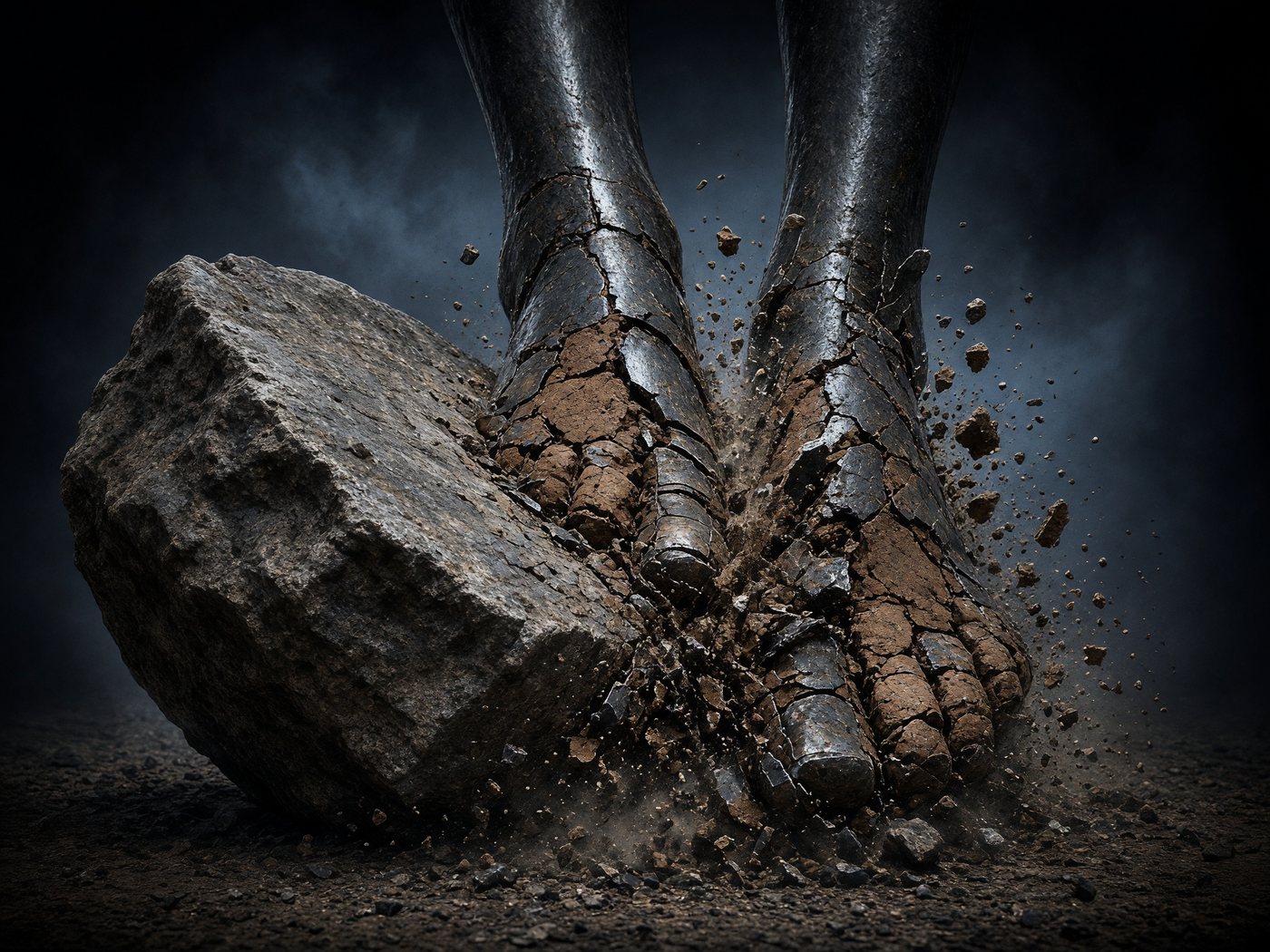
“Thou sawest till that a stone was cut out without hands, which smote the image upon his feet that were of iron and clay, and brake them to pieces.”Daniel 2:34
The dream does not end at the feet. It ends with something that has nothing to do with empires at all.
The Case for Christian Prophecy, Chapter 12, The Statue and the Stone
It struck the statue on its feet
“Then was the iron, the clay, the brass, the silver, and the gold, broken to pieces together, and became like the chaff of the summer threshingfloors; and the wind carried them away, that no place was found for them: and the stone that smote the image became a great mountain, and filled the whole earth.”Daniel 2:35
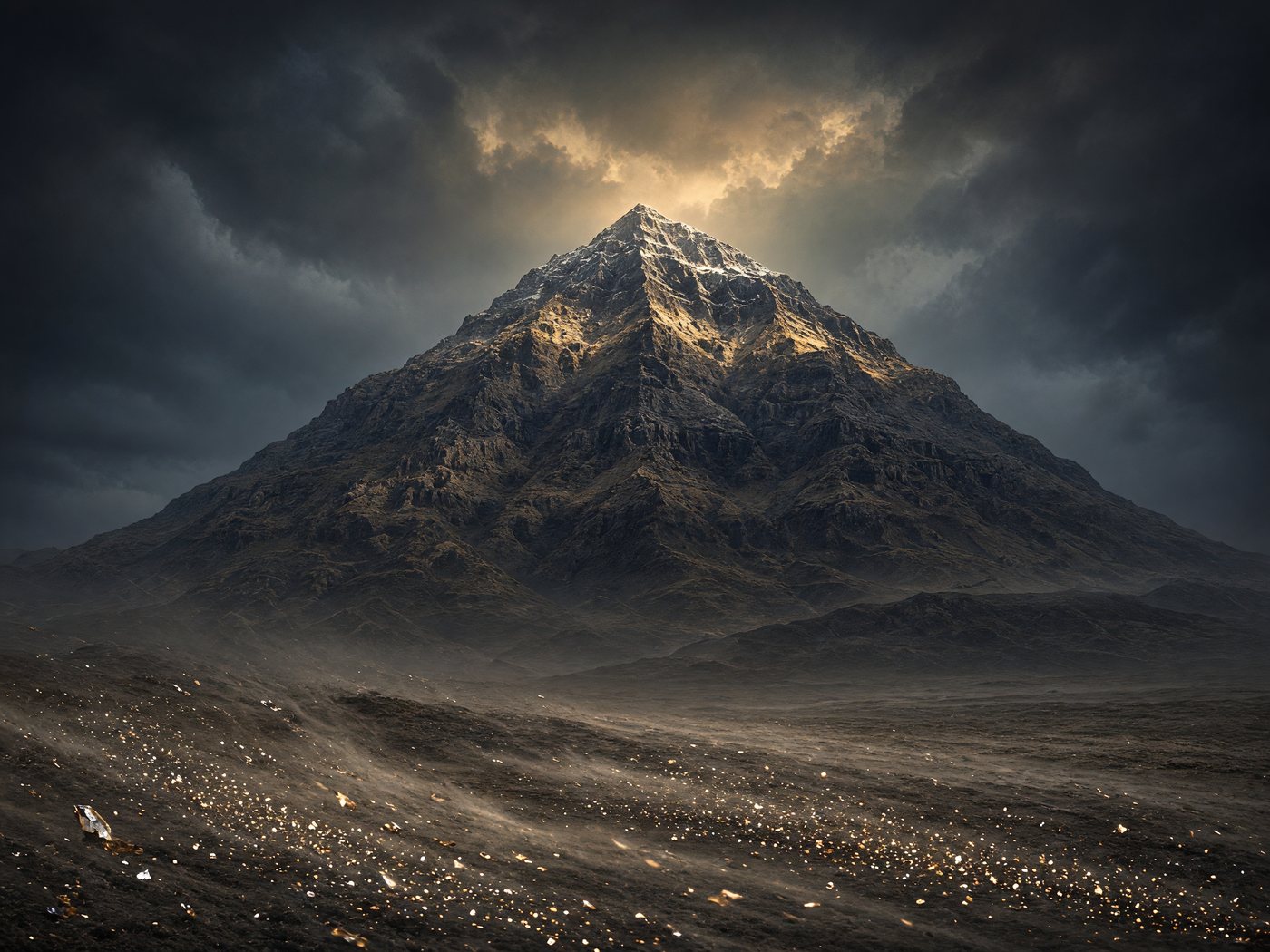
While the king watched the great statue, its gold head, silver chest, brass belly, iron legs and crumbling feet, "a stone was cut out without hands," and it struck the statue on its feet and broke the whole thing to pieces at once, "and became like the chaff of the summer threshingfloors; and the wind carried them away, that no place was found for them" (Daniel 2:34-35). Then the stone did not roll away. It grew. It "became a great mountain, and filled the whole earth."
The Case for Christian Prophecy, Chapter 12, The Statue and the Stone
A kingdom which shall never be destroyed
“And in the days of these kings shall the God of heaven set up a kingdom, which shall never be destroyed: and the kingdom shall not be left to other people, but it shall break in pieces and consume all these kingdoms, and it shall stand for ever. Forasmuch as thou sawest that the stone was cut out of the mountain without hands, and that it brake in pieces the iron, the brass, the clay, the silver, and the gold; the great God hath made known to the king what shall come to pass hereafter: and the dream is certain, and the interpretation thereof sure.”Daniel 2:44-45
Every kingdom in that statue is metal, gold and silver and brass and iron, dug out of the ground and shaped by human hands. They are what human power builds, mined and forged and raised up, and in time broken. Then comes a stone "cut out without hands," the one thing in the dream that no human being made. It does to all of them at once what each of them had done to the one before it. All of them are still there to be struck, because the statue is one standing figure and the older metals are the body the broken feet stand on. Then the stone stops there, and hands on to no sixth kingdom. Daniel said it to the face of the man who was himself the head of gold: the God of heaven would set up "a kingdom, which shall never be destroyed… it shall break in pieces and consume all these kingdoms, and it shall stand for ever" (Daniel 2:44). Of every kingdom in the dream, only one is still standing when the dream ends, and it is the only one no human hand built.
The Case for Christian Prophecy, Chapter 12, The Statue and the Stone
More from the book
The One it points to has already been named. A man the prophets described before He was born, pierced, counted among criminals, buried in a rich man's grave, is who this stone is. He is the stone the builders rejected, shown here no longer suffering but reigning, the kingdom that outlasts every kingdom, because it is His. Where the dream puts the blow is plain enough. The stone strikes the feet, and the feet are the last thing the statue has. Christians have read that landing in more than one place, and some read it as already behind us. On the reading followed here, the feet are the divided world we are still living in, so the blow they take is still ahead, and when it falls, and how, comes only at the very end. What matters now is where the whole sequence has been pointing. The empires are the frame around the picture. The stone is the picture.
The Case for Christian Prophecy, Chapter 12, The Statue and the Stone
Ellen White
The dream of the great image, opening before Nebuchadnezzar events reaching to the close of time, had been given that he might understand the part he was to act in the world’s history, and the relation that his kingdom should sustain to the kingdom of heaven. In the interpretation of the dream, he had been plainly instructed regarding the establishment of God’s everlasting kingdom.
Ellen G. White, Prophets and Kings, PK 503.1
Side by side
One history, drawn three times
This is where the repeated visions pay off. Each empire is drawn two or three times, from different angles, and every drawing lands in the same place. So here are the three visions side by side, the statue of chapter two, the four beasts of chapter seven, the ram and goat of chapter eight, read together, empire by empire.
The Case for Christian Prophecy, Chapter 12, The Statue and the Stone
| The statueDaniel 2 | The beastsDaniel 7 | Ram and goatDaniel 8 | The kingdom |
|---|---|---|---|
| Head of gold | Lion with eagle’s wings | — | Babylonnamed in Daniel 2:38 |
| Breast and arms of silver | Bear raised on one side | Ram with two horns | Medo-Persianamed in Daniel 8:20 |
| Belly and thighs of brass | Leopard, four wings, four heads | Goat, one horn, then four | Greecenamed in Daniel 8:21 |
| Legs of iron | Fourth beast, iron teeth | — | Romethe reading from history |
| Feet of iron and clay | Ten horns | — | The fourth kingdom, divided |
| The stone | The court sits; the saints receive the kingdom | — | The kingdom of GodDaniel 2:44 |
“Surely the Lord GOD will do nothing, but he revealeth his secret unto his servants the prophets.”Amos 3:7
Ellen White
In the annals of human history, the growth of nations, the rise and fall of empires, appear as if dependent on the will and prowess of man; the shaping of events seems, to a great degree, to be determined by his power, ambition, or caprice. But in the word of God the curtain is drawn aside, and we behold, above, behind, and through all the play and counterplay of human interest and power and passions, the agencies of the All-merciful One, silently, patiently working out the counsels of His own will.
Ellen G. White, Prophets and Kings, PK 499.4
The visions go on into a line of events still ahead. Walk the timeline of last events, or walk through the sanctuary.